
How I Use Photography in My Art: Image Transfer, Photocopies and the Photo Diary By Claire Hankey
Photography has always been woven into my practice, long before I thought of myself as someone who worked with it deliberately. It began simply, a phone in my pocket on an estuary walk, a quick photograph of a plant growing through a crack in a wall, a detail of weathered paint on a boat hull that caught the light in a particular way. I wasn't thinking about art at that point, I was just noticing.
It took me a while to understand that this noticing was the art. That the photograph wasn't just a reference image or a memory aid, it was the beginning of a whole way of working.
The Photo Diary: Seeing Before Making
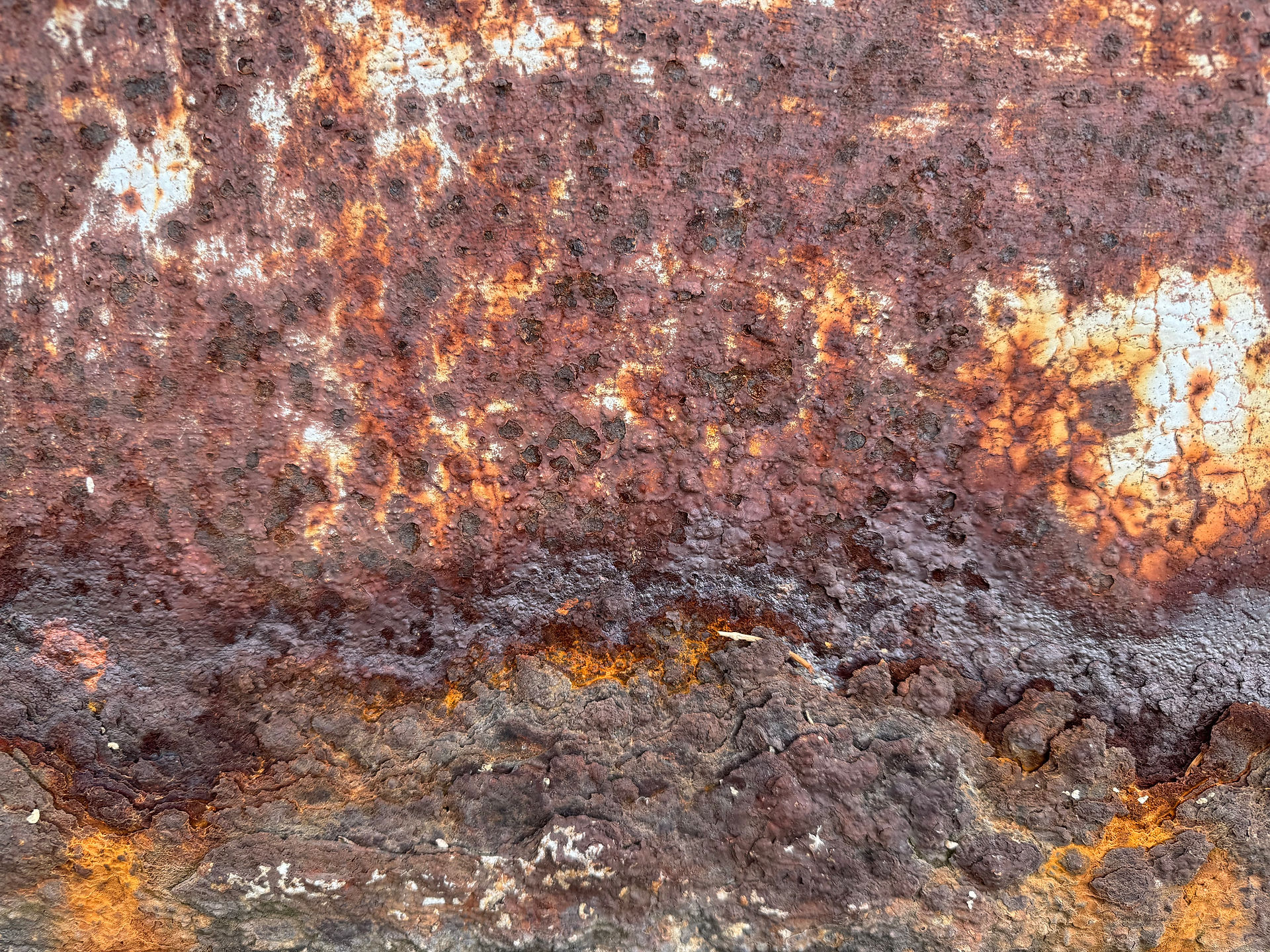
Before anything reaches my studio, it normally passes through my camera. I keep what I think of as a visual diary, a running collection of images taken on walks around the Thames Estuary, in the marina where my studio is based, and in my own garden. These are rarely polished photographs. They are close-ups of overlooked things: a tangle of brambles at a field edge, the cracked surface of a harbour wall, seed heads catching the winter light.
What I am looking for is not the obvious or the beautiful in a conventional sense. I am drawn to things that most people walk past. Plants growing at the verge of things. Surfaces that have been shaped by weather and time.
This visual diary has become the foundation of everything I make. It is where ideas begin.
Photocopies: The Unexpected Magic of the Machine
One of the most useful and least obvious tools I use is the humble photocopier. I use photocopies of my photographs, botanical specimens, and found papers as a starting point for collage and mixed media work.
What I love about a photocopy is what it does to an image. It flattens it, removes the colour, increases the contrast, and introduces a slightly grainy, imprecise quality that feels aged and tactile. A photograph of a leaf becomes something closer to a botanical illustration. A close-up of weathered concrete becomes an abstract surface full of texture and tone.
I layer these photocopied images into my paintings and mixed media pieces, sometimes embedding them so deeply under paint and wax that they are barely visible. They become part of the archaeology of the work, present but not dominant.


Photopolymer etching of plant forms by Claire Hankey
Image Transfer Techniques: Photography Transformed
What is image transfer?
Image transfer is one of the most exciting techniques I have developed in my practice, and one I love to share in my online course Creative Image Transfer. At its heart, it is a way of taking a photographic image and embedding it directly into another surface — wood, canvas, paper, fabric, so that it appears to become part of the material rather than sitting on top of it.
The results are never quite what you expect. The transfer process softens edges, introduces texture, and creates a quality that sits beautifully between photography and painting. The image becomes a trace rather than a record. It has the feeling of something remembered rather than something captured.
I work with InkAid transfer sheets, which give beautiful results on a range of surfaces, and I have spent a lot of time developing a process that allows me to combine transferred images with layers of paint, collage and mark-making. The photograph disappears into the work and becomes something new.
Image Transfer or photocollage, which technique to use...
Photo collage in contrast to Image Transfer, involves printing the photograph onto a sheet of fine paper before applying it to your artwork. My comprehensive online course, Creating Veiled Images covers the entire process from start to finish, how to take and edit photographs specifically for collage, which papers and surfaces work best, and how to embed your images into your own artwork. Over 260 students have taken this course, and I love seeing what people create with it.
I also run Creative Image Transfer, a shorter course focused specifically on using InkAid transfer sheets on wood, canvas and paper. It is a wonderful introduction to the technique and a great companion to Creating Veiled Images.
The techniques are very different and whilst through a screen, the work may look similar, in the flesh they look and feel different. If I had to pick a favourite it would have to be photocollage as personally, I find it easier to control and veil the image so it becomes part of the artwork.
From Photograph to Photopolymer Etching
More recently, photography has taken on a new role in my practice through printmaking. Following a residency at The Art Print Residence in Barcelona in 2026, I began working with photopolymer etching — a process that uses a light-sensitive plate to translate a photographic image into a print.
I take my own photographs of plant forms, weathered surfaces and the wild edges of the estuary, then use these as the basis for etchings that carry all the atmospheric quality of the original image while gaining the particular depth and texture that only print can give. The photograph becomes a starting point, and the plate, the ink and the paper take it somewhere new.
This layering of photography and printmaking feels very true to what my work has always been about, the idea that an image can hold more than one moment in time, that a surface can carry the feeling of a place rather than just its appearance.
Why Photography Matters to This Practice
I am often asked whether I consider myself a photographer. The honest answer is no, but I could not make the work I make without it. Photography is how I see before I make. It is the first layer, the starting point, the visual memory that everything else grows from.
What interests me is not the photograph as a finished object but what happens to it when it is transferred, layered, printed, or partially concealed. The image transformed. The trace of something rather than the thing itself.
If you are an artist who takes photographs but hasn't yet thought about how they could feed directly into your artwork, I would love to show you how. It has changed the way I work entirely. In my online course I cover what papers to use, which gel mediums work best, your substrate- canvas, wood or paper.
Printers for Image Transfer and Photo collage.
I use a HP Officejet 9010 which accepts black pigment ink, but not all inkjet printers do so please check with your supplier or email me and I'll check the model for you. It's really important pigment ink is used otherwise the collage will smear and fade, as will the image transfer. If you are wanting to create colour image transfer and collage, you must use colour pigment ink too- my printer doesn't have this feature but I'm hoping to update it next year!
Claire Hankey is a British mixed media artist and printmaker based in Leigh-on-Sea, Essex. She works across painting, monotype, drypoint and photopolymer etching, with photography at the heart of her process. Her online courses Creating Veiled Images and Creative Image Transfer are open now.
Explore the work at clairehankeyartist.com


Comments